
Join the Community of Practice on Gender Medicine and Health!
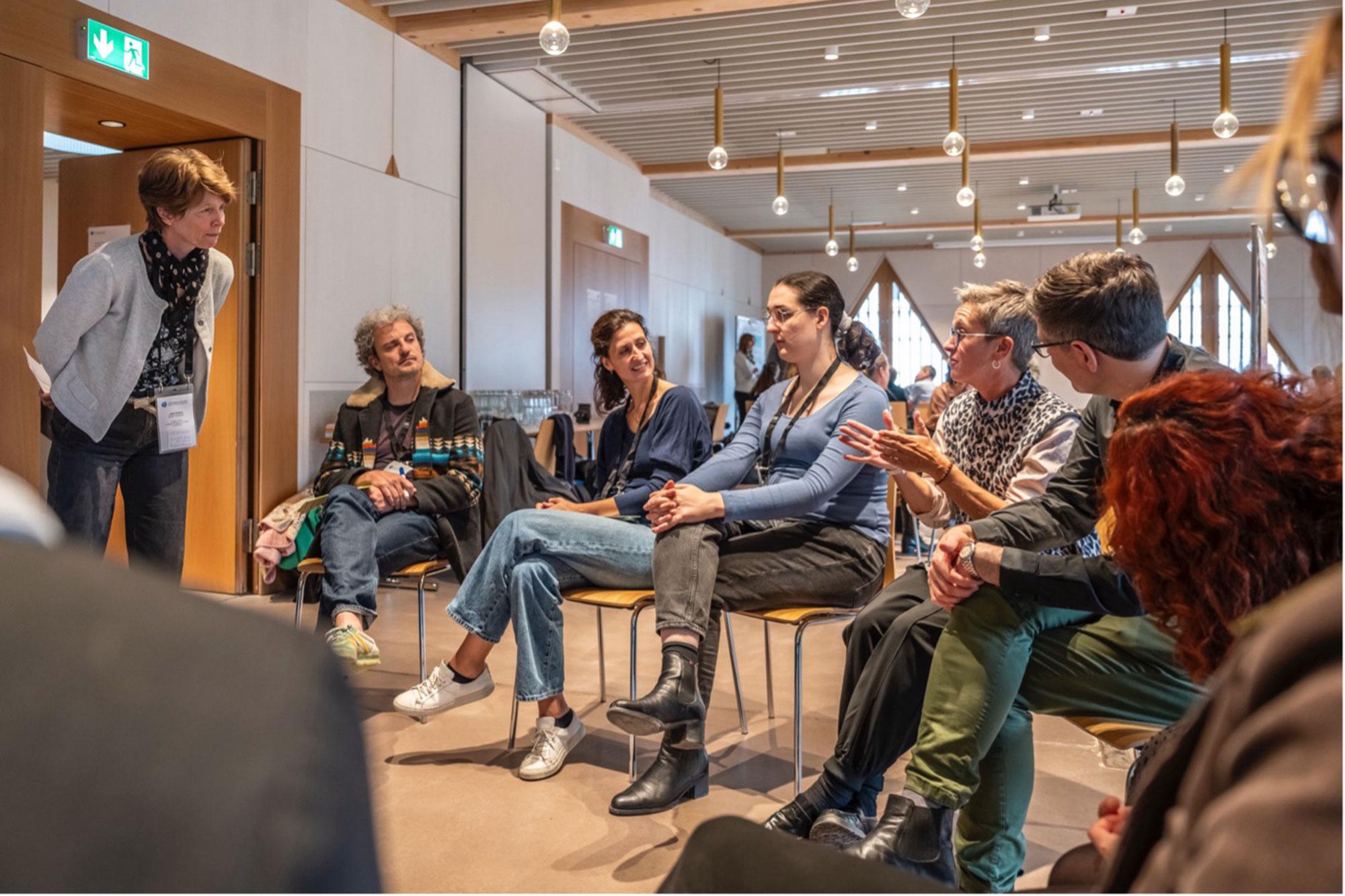
The CoP is open in particular to researchers, healthcare professionals, representatives from educational institutions and professional associations, patients and decision-makers who are interested in the impact of sex and gender on health and wish to contribute to the development of concrete solutions.
The following working groups will discuss their questions at the next peer-to-peer exchange:
Group Intersectionality – qualitative research
How can intersectionality be systematically integrated into qualitative research designs – from recruitment through to analysis and interpretation?
The aim is to develop an integrative framework for intersectionality in qualitative research and to discuss practical ways of implementing it – both within the research process itself and in the dissemination of the findings. The starting point for the first meeting will be a discussion of experiences, existing resources, best practices and practical advice.
Be aware, there will be a new Working Group Intersectionality focusing on quantiative methods in parallel.
Group Education
How can gender-sensitive content be integrated into educational frameworks for health and medicine and implemented within the federal education system?
The discussion focuses on conceptual and pedagogical approaches to integrating gender into health education programmes. It draws on current literature, ongoing debates and insights from research and practice. The aim is to establish a shared framework for curricula, target groups, teaching methods and materials for training and knowledge transfer.
Group Language
How can language- and culture-sensitive guidelines on gender and diversity be developed for multilingual Switzerland?
Translation and adaptation processes reveal that key terms and concepts are defined differently and contextualised culturally across the Swiss languages. A jointly developed best-practice guide in all national languages could provide guidance for researchers, improve communication and facilitate respectful and safe interactions with diverse population groups.
Group Engagement
How can key stakeholders who have so far shown little awareness of gender issues in medicine and public health be reached and engaged?
To encourage broader participation, we need a better understanding of the barriers and enabling factors that influence the interest of professionals and other stakeholders. Building on this, targeted communication and implementation strategies can be developed to strengthen knowledge, attitudes and practice in addressing gender issues in the long term.
Group Intersectionality – quantitative methods
How can quantitative methods best be leveraged in intersectional studies?
In the first peer-to-peer exchange in May 2026 a discussion about quantitative research emerged in the Working group “Intersectionality – qualitative methods”. The aim of this new Working Group is to document the underlying rationales for the use of suitable methods for quantitative intersectional studies and to explore the creation of a respective national database.
Be aware, the Intersectionality Working Group focusing on qualitative research will continue its discussion in parallel.
Group Data access
How can data access to relevant, existing data be ensured (for research purpose)?
The aim is to highlight the value of relevant existing data, for example from Swissmedic or ethics committees or insurances, and to develop a coherent case for making such data accessible to researchers. This case should strengthen calls for appropriate data regulations that enable critical research and help realise the full potential of these data.
Group Inter- and transdisciplinarity
How can inter- and transdisciplinary projects integrate their research activities to find a common language and approach?
The aim here is to have an in-depth exchange on how researchers with different disciplinary backgrounds (and potentially practice partners/ co-researchers) can find ways of working together productively. Many inter- and transdisciplinary projects find themselves challenged by the need to develop a common language and methods that transcend disciplinary and academic boundaries. This working group aims to dedicate time and space to this crucial process.
Join the discussion and get involved
We would be delighted to hear from you if you are interested in sharing your perspective on any of these issues and working with the CoP working group to develop solutions.
Would you like to be informed about upcoming events or set up your own working group to tackle a specific issue, or get involved in the core group to help organise events? Please feel free to get in touch with us:
.
Please let us know your role, organisation and your interest.