
When Prejudices Influence Treatment – On Stereotypes in the Healthcare System
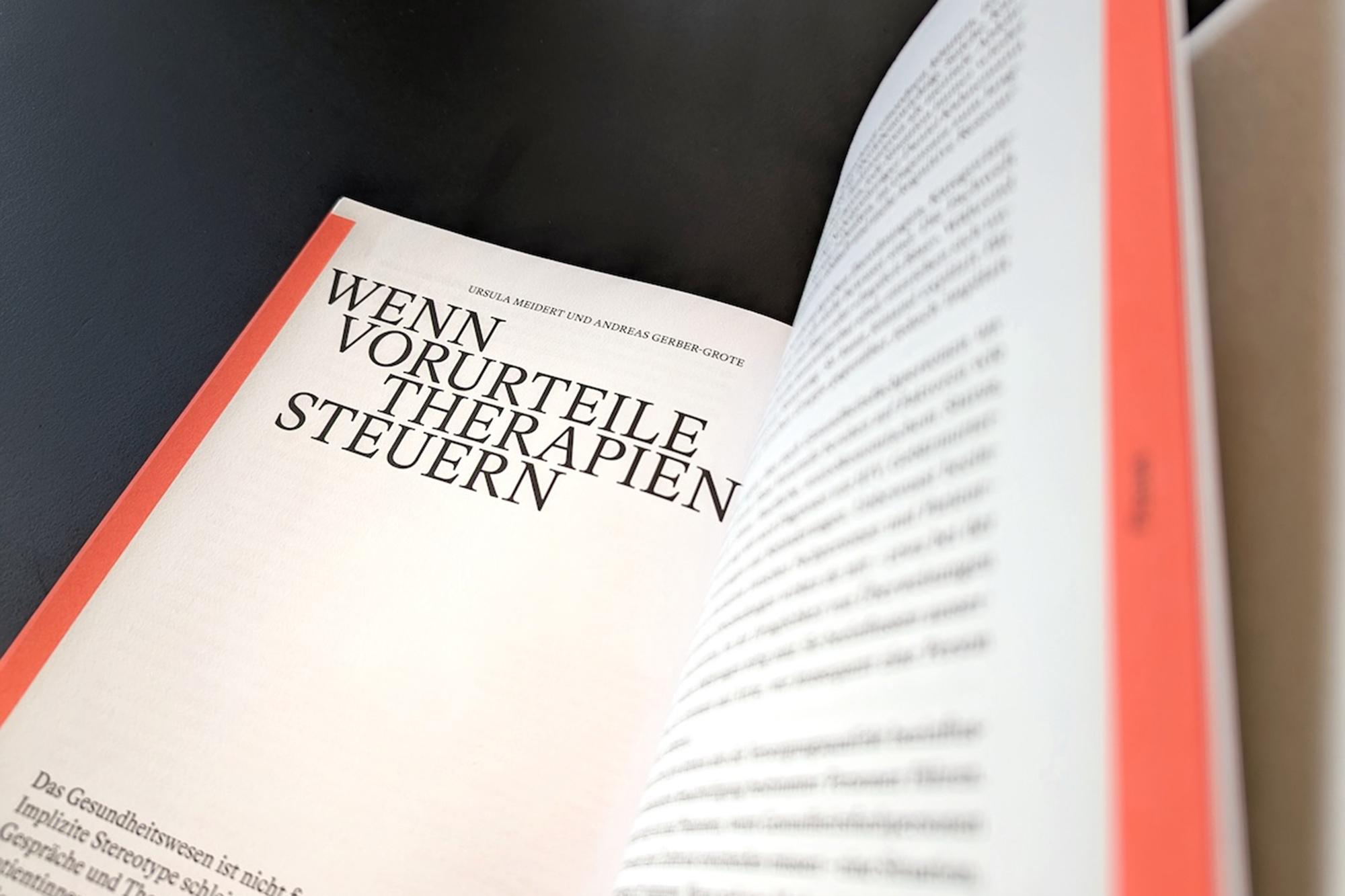
Andreas Gerber-Grote, a member of the NRP 83 steering committee, and Ursula Meidert discuss the role of implicit stereotypes in the healthcare sector in the SAGW Review.
The first issue of the new “Revue” published by the Swiss Academy of Humanities and Social Sciences (SAGW) is devoted to the topic of “stereotypes”. Andreas Gerber-Grote, a professor at the Zurich University of Applied Sciences (ZHAW) and a member of the steering committee of NRP 83, and Ursula Meidert, a lecturer at the Institute of Public Health at ZHAW, contribute to the magazine with their article “When Prejudices Influence Therapies”
In this article, they demonstrate that the healthcare system is not immune to prejudice – or, indeed, stereotypes – and outline the consequences this has for patients. The authors explore, for example, where these stereotypes among healthcare professionals originate and how they manifest themselves throughout the healthcare process, from the medical history and diagnosis right through to treatment.
The article also addresses approaches such as awareness-raising and educational measures aimed at breaking down stereotypical perceptions of patients, for example based on their background, gender or income. Gerber-Grote and Meidert conclude that individual training programmes for healthcare staff are not enough. Addressing prejudice at a structural level also warrants attention if unequal treatment is to be effectively and sustainably eliminated.
Switzerland is still in the early stages, both in terms of social awareness and in terms of research and effective initiatives aimed at breaking down stereotypes in the healthcare sector.
The projects under NRP 83 contribute in various ways to highlighting such stereotypes, reducing them and preventing them. PD Dr Joëlle Schwarz (University of Lausanne), for example, is investigating how gender, age, class and sexual orientation influence medical decisions, such as diagnoses or the choice of treatment. Drawing on historical and current practice, the project aims to provide concrete approaches for a fairer, gender-sensitive form of medicine. Further information on the project is available on the NRP 83 website.