
A snapshot of the working group: the challenge of developing a common language guide
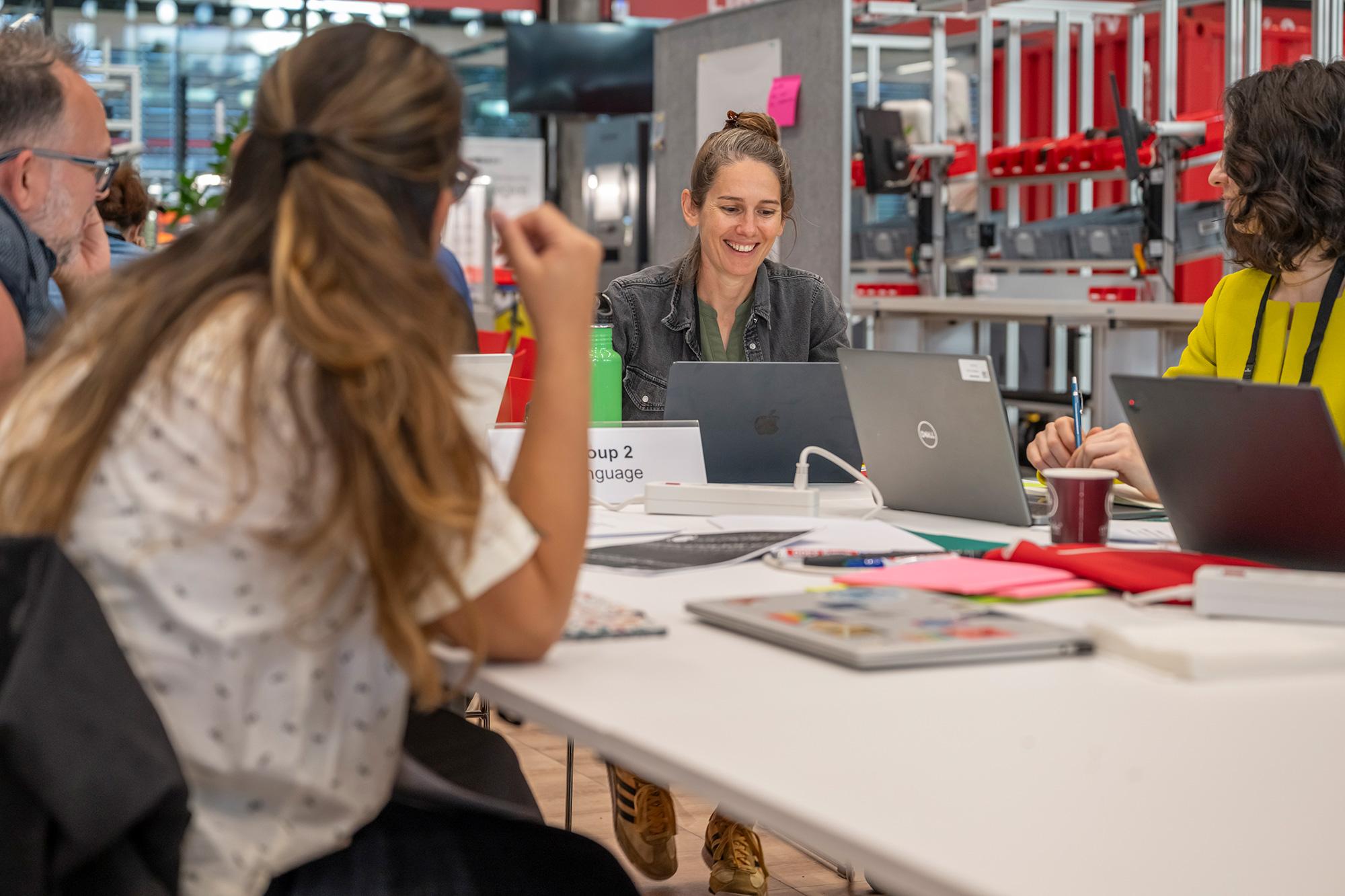
How is a common language guide for multilingual Switzerland developed? A Community of Practice working group explains how it defined its objectives and target audience; next comes a glossary, or guide and sensitive terminology.
Snapshot of the working group: Towards a joint language guide
How can linguistically and culturally sensitive guidelines on gender and diversity be developed for multilingual Switzerland that help researchers to communicate accurately and respectfully? A working group within the Community of Practice (CoP) has been addressing this question since the first Peer-to-Peer Exchange. Their approach serves as a prime example of how the CoP’s working groups operate.
First understanding, then content
Even during the first discussion, it became clear that, before delving into the content, the objectives and target audience of such a guide had to be clarified. The participants’ expectations initially differed on this point, so a consensus had to be reached. To move the work forward, an existing glossary and a guide were used as a basis for discussion. The group also agreed to survey the research teams about the frameworks they use and the challenges they face.
Round two: Specific terms, open questions
During the second discussion, the focus was on whether the two proposed products already addressed the identified obstacles – or how they would need to be combined, further developed or adapted in order to achieve this. The group also discussed specific terms that proved to be particularly challenging or sensitive.
Working in a group where everyone participates on an equal footing presents its own challenge: many issues can be resolved only by consensus. Nevertheless, the group remains motivated. A shared terminology guide would not only be a valuable tool for research, but could also provide clinicians with a practical foundation for their day-to-day work.
Would you like to get involved? The working group would be delighted to welcome further members who would like to contribute their perspectives and expertise. If you are interested, please get in touch by sending a message to
.