
«The CoP brings together brilliant intellectuals in the space of gender medicine»
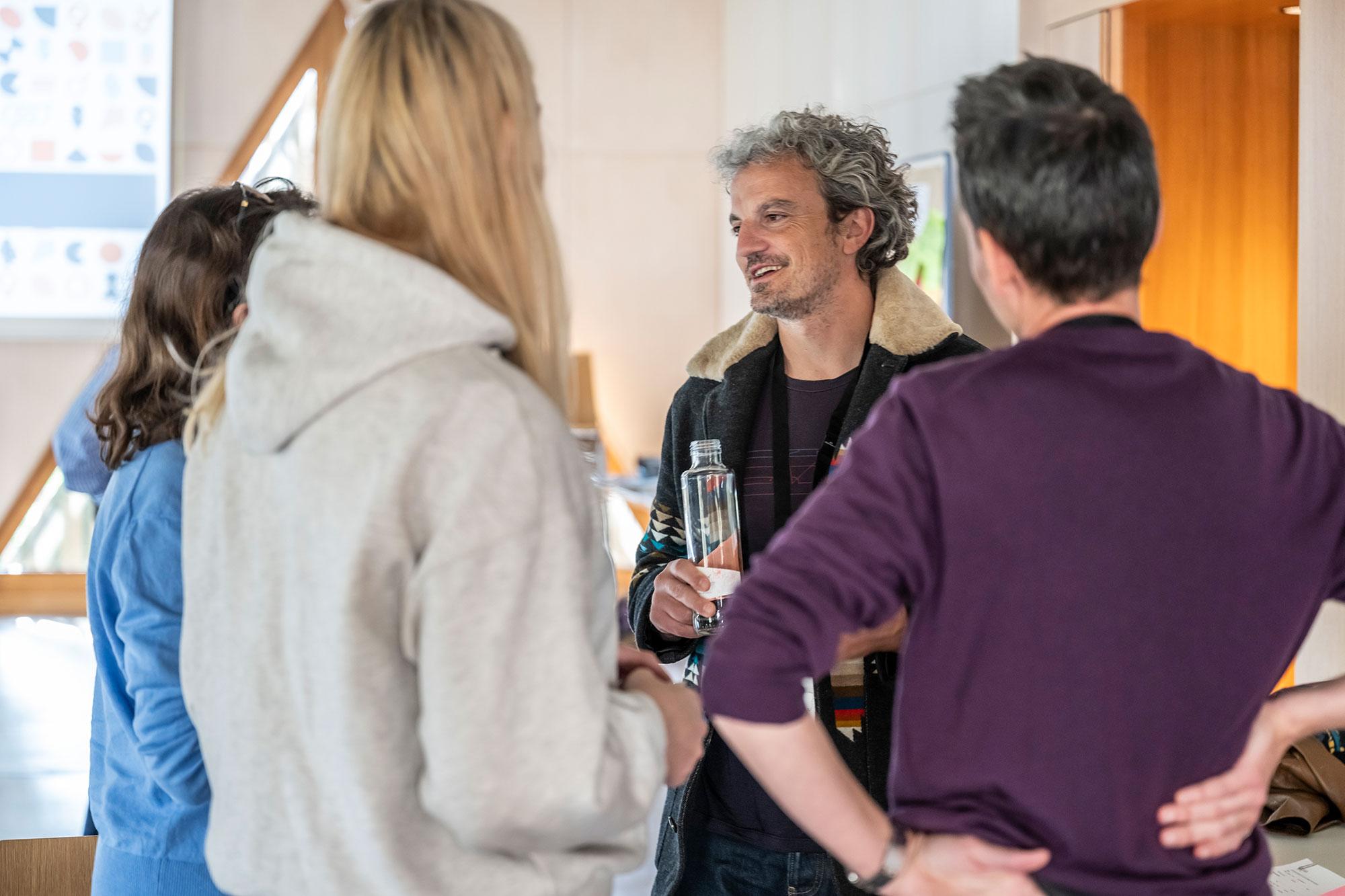
The Community of Practice aims to bring like-minded people together, pool expertise and give research a boost. We asked Ben Cislaghi, member of the NRP 83 steering committee, what he personally expects from it.
Ben, where do you currently see the greatest challenges in gender medicine research in general?
The existing health system faces several gender-related challenges. Historically, biomedical research has paid insufficient attention to how treatments affect women, leading to gender imbalances in what treatments are developed, how, and for whom. In addition to skewed research samples, social factors strongly influence whether and how people of different genders access health services. This reflects international developments, not just the Swiss context.
The medical system alone is not equipped to address these challenges and requires closer integration with public health efforts to reduce gendered barriers to care. Growing resistance to women’s access to sexual and reproductive health services is just the tip of the iceberg of a system that is at risk of becoming increasingly (and, to a certain extent unwittingly) discriminatory towards specific groups of people. Among these, one example is the unresolved challenge of how to ensure safe access for people of non-heteronormative orientation as well as trans people.
What can the Community of Practice offer to meet these challenges?
This Community of Practice gathers some of the most brilliant intellectuals in the space of gender medicine and health in the country. Their insights, paired with their data and the connection with their partners both in the health systems and activist work, can help to understand challenges and identify plausible, if not even realistic and effective, solutions to improve the health of all.
What differences do you see between a Community of Practice and traditional exchange or networking formats?
A Community of Practice has a common agenda, sustained by the individual study purposes that each organisation works for. Coalescing a CoP means shepherding organisations towards a collective vision and mission, helping them recognise how that vision and mission is implicitly embeddded in their individual work, and use their findings and efforts across their projects. Not – or at least, not exclusively – with a cross-fertilisation purpose, but with the intention to create a collective voice that is louder than the sum of its parts.
In your opinion, to what extent can a Community of Practice contribute to initiating sustainable change in gender medicine research?
Change is not in the hand of academics. It is in the hands of people and policy-makers. The responsibility of a CoP of academics is to find ways to provide accessible information – rather than academic papers – that helps people choose courses of action leading to health outcomes that matter to them, and to communicate clearly with policy makers in order to draw attention to emerging patterns across the many studies within the CoP. While policy makers tend to be overwhelmed with research and recommendations in ways that make the findings of a single study difficult to reach them, the voice of a CoP can rise on the list of priorities they need to consider.
Why is mutual learning between researchers, practitioners and other stakeholders important?
Academic institutions – and many of the people in it – tend to privilege a way of knowing based on data-driven causal inferences. This bias for documentary research is dangerous. An academic study might prove with quasi-absolute certainty that putting water in the tank of your car will destroy the engine, but if you want to know how to repare it in a cost-efficient way you will probably ask the advice of a mechanic, not a researcher. The embodied and practical learning that practitioners have to offer is crucial, as it completes the theoretical work that academics carry out. In fact, without the work of practitioners, there would be little to study and provide evidence of effectiveness for.
How can the steering committee of the NRP 83 actively support the establishment of the CoP?
The steering committee is the glue that holds the CoP together. While individual organisations are understandably busy carrying out and immersing themselves in their own studies, the steering committee is responsible for staying alert to the patterns and cross-learning emerging from the collective reanalysis of findings from the individual studies.
What risks or challenges do you see in establishing a Community of Practice?
Gathering a Community of Practice without clear incentives and benefits for its members is like trying to get a group of stray cats to sit quietly while surrounded by mountains of food. A CoP where participation is mandatory will not last long. There needs to be a clear return on investment, so to speak, that justifies taking time away from project work to participate in the critical conversations that a CoP offers.
How would you recognise that the Community of Practice is successful?
A successful CoP is one where members consistenly show up, propose new ideas, take on collaborative projects and eventually produce outputs that go beyond their invididual work.
What message would you give to researchers and stakeholders who engage in the CoP?
Sloman and Fernbach’s The Knowledge Illusion shows that each of our individual brains is limited and incomplete and, on its own, can do very little. As a civilisation, we have survived and thrived by relying on others to fill our individual knowledge gaps. This collective intelligence is what Joseph Henrich describes in The Secret of Our Success. A CoP reflects this principle: by trusting the potential of our collective brain, we can achieve far more than any of us could individually.
Prof. Dr. Ben Cislaghi, member of the NRP 83 steering commitee, is an international development scholar and practitioner specialising in gender norms, social justice, and community-led development. He is an Associate Professor at the School of Social Work, Makerere University in Uganda, and a Research Fellow at IDS (UK, Brighton).